
The colour that changed everything
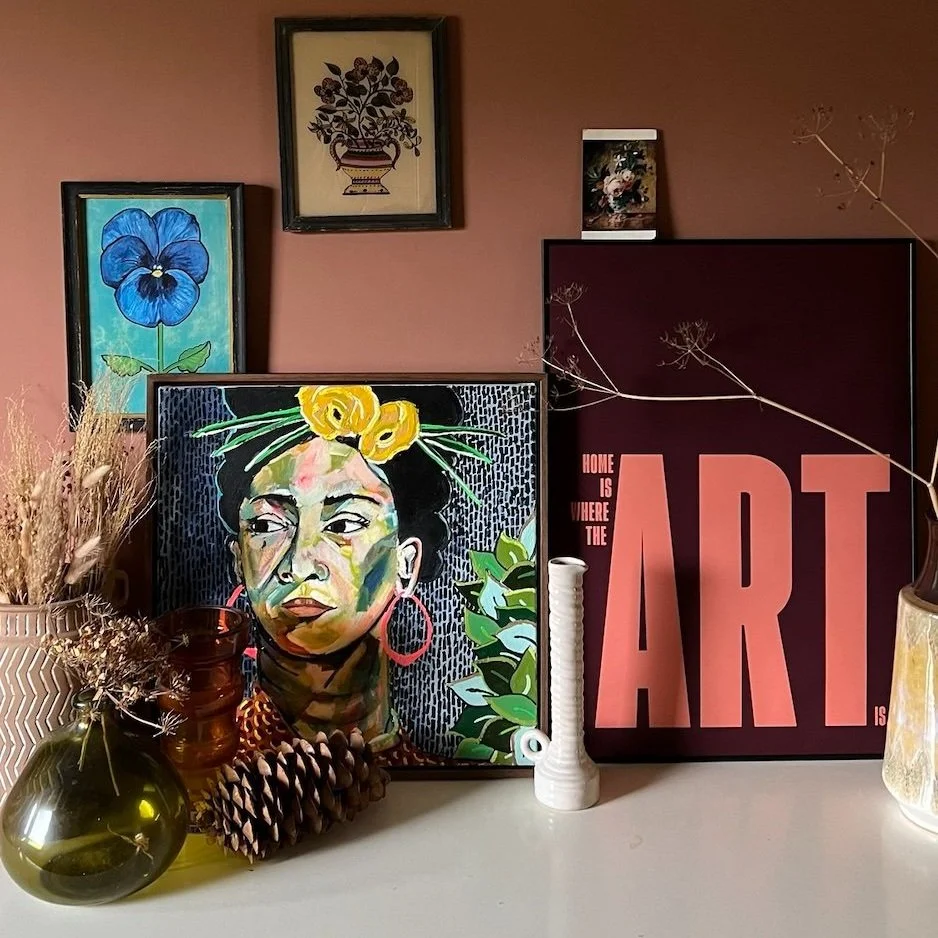
One of my current favourite wall colours - terracotta. The perfect backdrop here for a beautiful painting by the owner of the pizza restaurant & gallery I designed in Tunbridge Wells, Palette Pizza & Art.
It was 1999, and I'd just bought my first flat - back when you could still buy a one-bedroom place in south London for under 100K.
Around the same time, an errant boyfriend introduced me to the world of outdoor trance parties. As he hopped from one festival to the next, I tagged along. It was a world drenched in colour, and it completely changed the way I thought about interiors.
And the first colour that spoke to me was a deep fuchsia pink something like this:
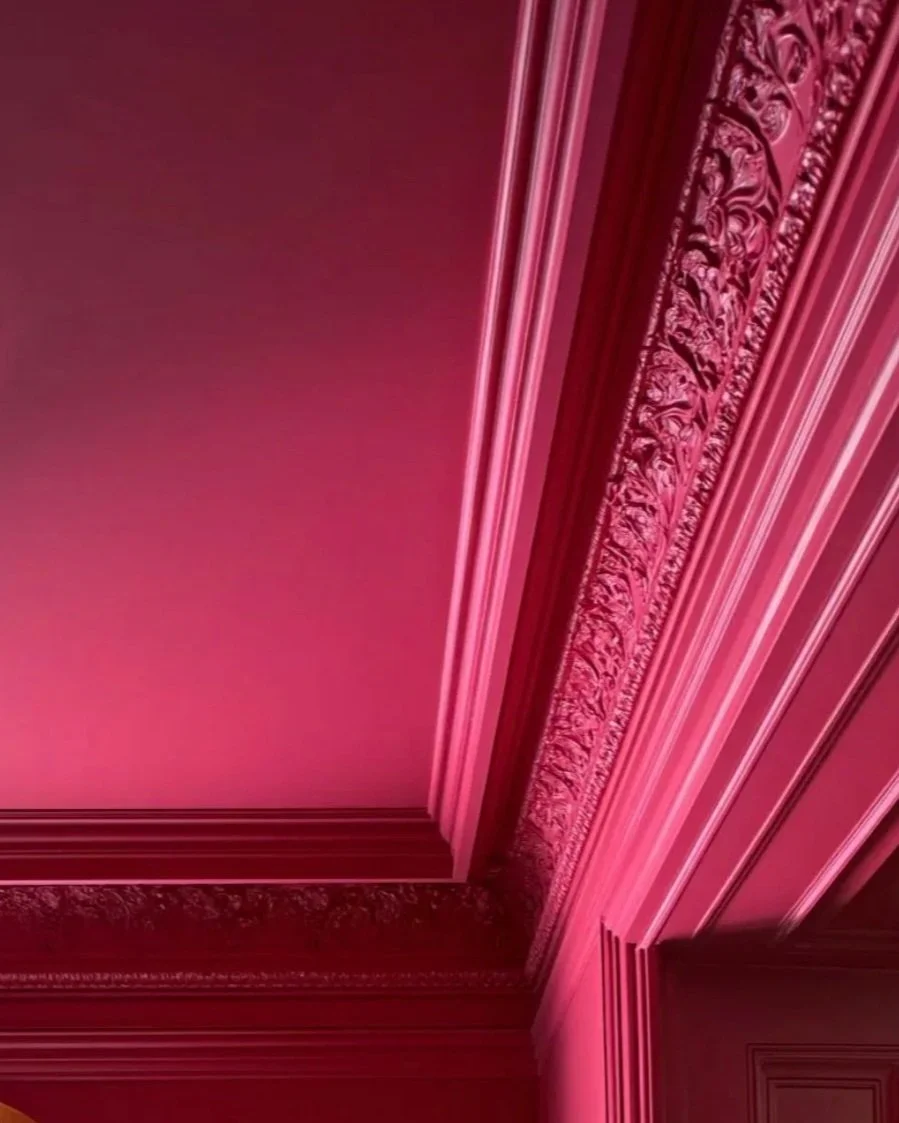
Not my actual old hallway which was far simpler than this, but the colour is pretty close. Paloma pink paint.
She wasn't everywhere in the flat (she definitely felt like a "she"), but she was the first thing you saw as you climbed the stairs into my attic home, tucked beneath the eaves of a Victorian conversion.
She announced exactly who my twenty-seven-year-old self wanted to be.
The colour represented non conformity, independence and creativity to me - and was about rebelling against the standard interiors’ expectations that were put on home owners back then. And, more importantly, it was about as far removed from the style of my parents’ house as you could possibly get.
You could call it my first interiors rebellion if you like.
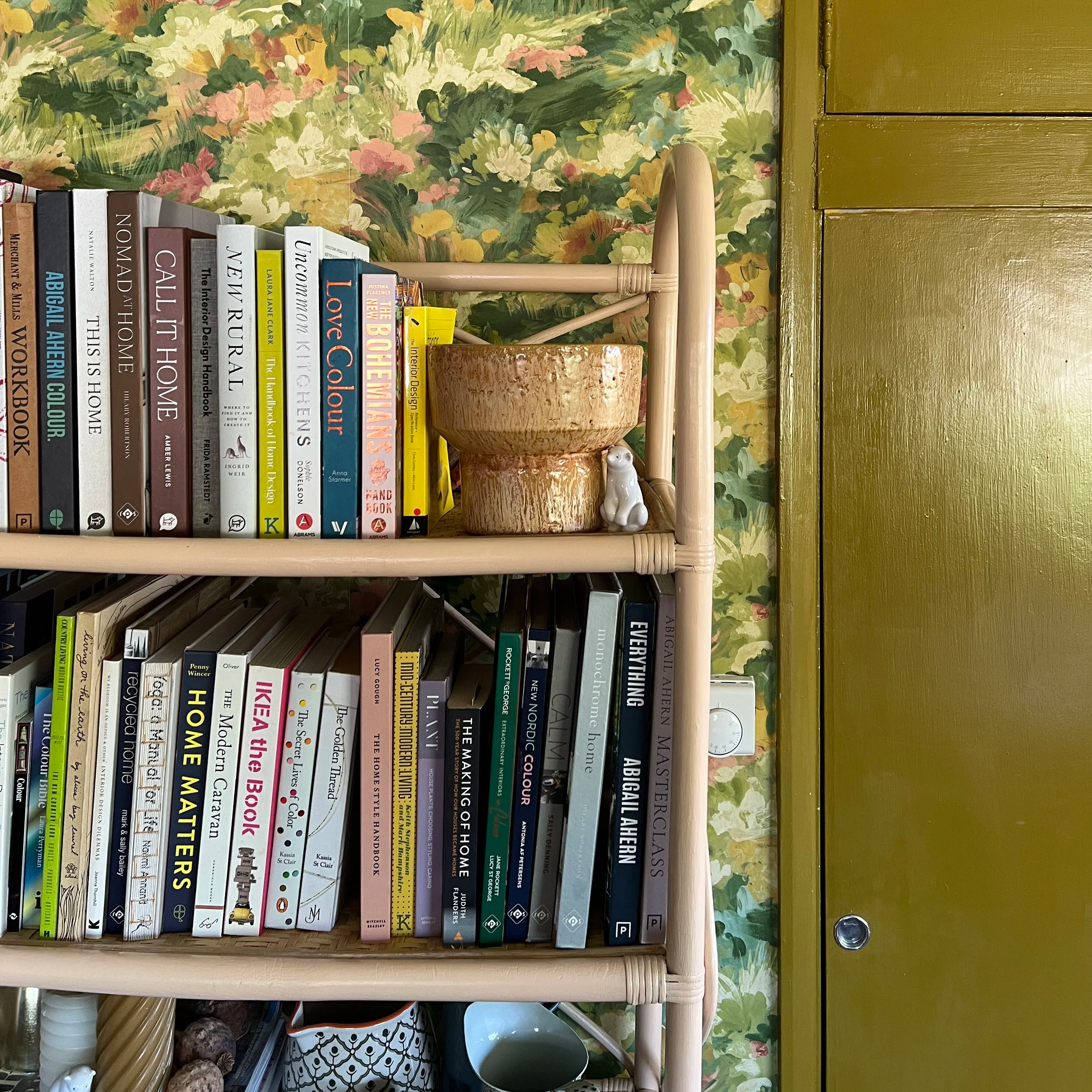
A deep sludgey yellow green that might not be to everyone’s tastes - but I love it.
But that’s the thing with colour, it is psychological and does carry emotional impact and meaning. Which is what a lot of people don’t get.
But that's the thing with colour: it is psychological. It carries emotional meaning, whether we consciously realise it or not. And I think that's what a lot of people miss.
People often assume the problem is that a colour doesn't suit their home. More often than not, it isn't that it looks wrong - it's that it feels wrong.
We copy a colour because we admire it somewhere else, without asking whether it creates the atmosphere we actually want to live with. When it doesn't, we conclude that colour simply isn't for us.
Which is such a shame.
Because colour can be so transformative in the home but it does need careful consideration and planning. A bit like when you learn to drive and you repeat that mantra constantly ‘mirror, signal , manoeuvre’. Only with colour it would be ‘sample, sit with it, wait’.
You have to ask yourself how it makes you feel and whether it’s fitting the emotional brief you want it to - because colour triggers different emotions in all of us…and I bet you that the sludgy green-brown I’ve painted a set of sliding doors in my kitchen (that hide the washing machine and anything else I don’t want on display) would remind a lot of you of week-old puddle water that you really wouldn’t want the dog to drink from… but I love it.
But I might not have loved it a few years ago. In fact I definitely think I wouldn’t have loved it a few years ago. And I believe it’s not so much that our visual tastes necessarily change, but more that our emotional needs do. Which in turn affects our surroundings and how we decorate them.
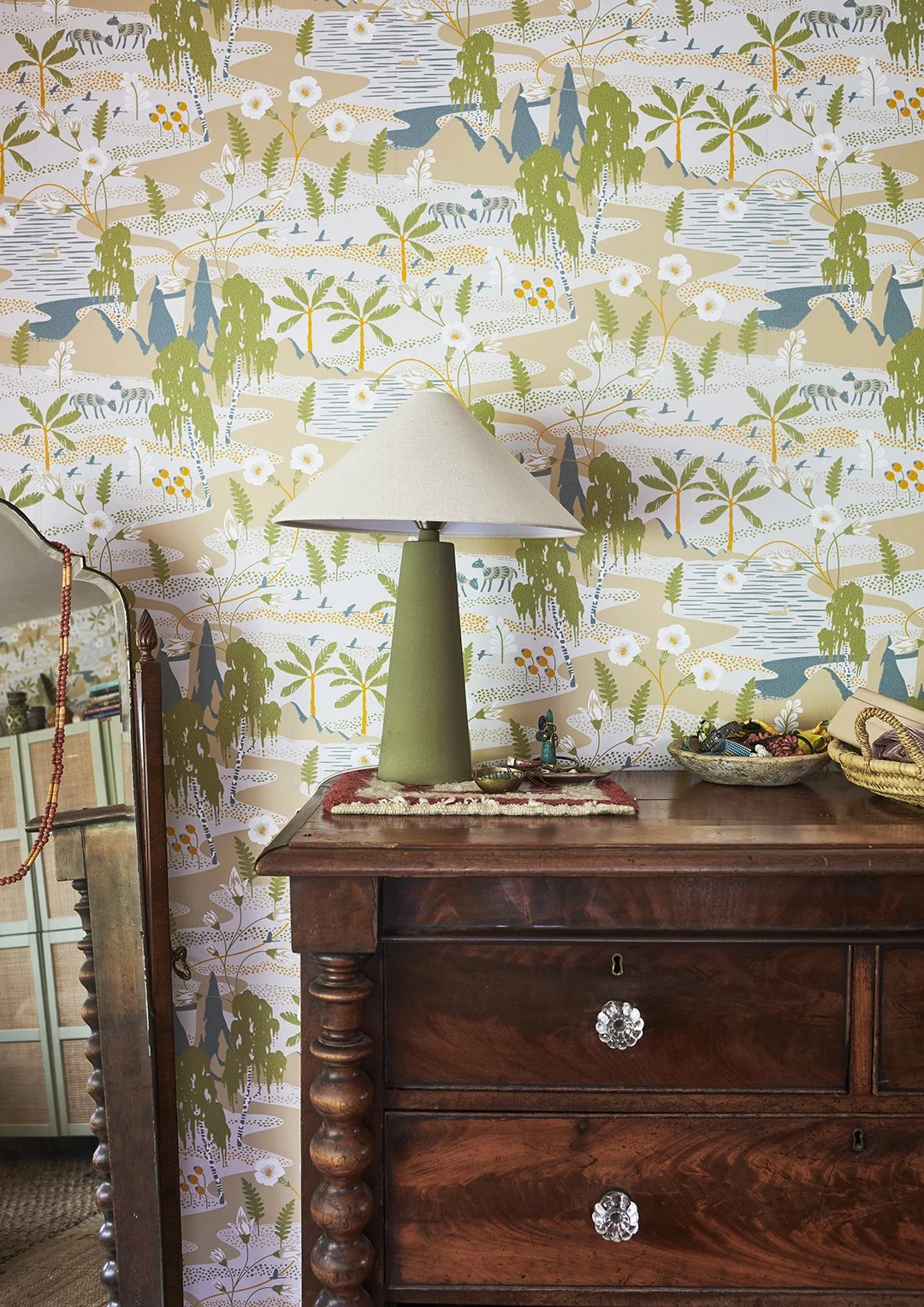
The bedroom wallpaper I still love five years later after installing it, Flyttfro by Borastapeter - sadly no longer available in this colourway but they still have it in a darker version
So if you're standing in front of a paint chart feeling completely overwhelmed, perhaps stop looking at the paint chart altogether.
Instead, look around your own home. A favourite painting. A faded vintage rug. A much-loved jumper. A piece of pottery. Somewhere in there is probably a colour you've been instinctively drawn to for years.
Start there. Then explore the lighter, darker and softer versions of that colour until you find one that feels right for the room, and works with both your natural light and the rest of your home.
Because that's what choosing colour really comes down to.
Not following trends.
Not finding the "perfect" shade.
Simply discovering the colours that feel most like home to you.
Still feel overwhelmed with colour?
My online course, Colour Confidence, will help you understand why some colours feel right, why others don't, and how to make decisions you'll love living with.